British Muslim speaker and blogger Adam Deen came to DCU before Christmas to give talks on miracles in the Qu'ran and on The God Delusion. I caught up with him in DCU's Helix Cafe and in a lengthy discussion, I asked what Irish Muslims could do to better integrate themselves in to Irish society:
“Irish Muslims need to be more politically involved. They need to have their hands in all the institutions because what happened with Britain, for example, is that they were too complacent and they were too interested in having their day-to-day lives and just carrying on. When a tragic event like 7/7 happened, they were not prepared to defend themselves against claims made by people. Now they’re putting out fires, where before they could have painted a more positive picture of Islam. All that we’re doing now is defending, defending, defending and we’re not doing a very good job of that either. What Muslims can Ireland can learn from the UK is to keep politically involved. They’ve got to learn from our mistakes. "
Mr Deen also spoke of the need for Muslims to distinguish themselves from the more radical elements of their faith;
"We also have idiots going out and putting fuel on the fire. Muslims need to ostracise these people."
Finally, I asked Mr Deen about the distinct lack of Irish Muslims in politics. He quickly interjected, saying;
"I’m very against this idea of people being just being a “Muslim candidate”. Muslims need to pull in votes from outside their own community."
Many thanks to Ms. Khaula Bhutta and the DCU Islamic Society for allowing me the time to interview Adam Deen.
Showing posts with label Irish Politics. Show all posts
Showing posts with label Irish Politics. Show all posts
Friday, January 22, 2010

Tuesday, September 29, 2009
The Lisbon Treaty: The Socialist Party View
Here follows an interview with Stephen Rigney of the Socialist Party, Parliamentary Assistant to Joe Higgins MEP
Sum up for us, in 30 words or less (or as brief as possible), why the Socialist Party is opposed to the Lisbon Treaty.
We believe that the Lisbon Treaty enshrines the concept of the free market, the privatisation of healthcare and education and the "race to the bottom" in wages and conditions, while giving a huge impetus to the militarisation of Europe. It is a continuation of the same failed policies that have resulted in this economic crisis.
Why do you think unions like SIPTU are in favour of the treaty?
Well, we'd draw a very sharp line between the rank-and-file membership of unions like SIPTU and the leadership who support the Lisbon Treaty. The leadership's support for Lisbon is directly related to the fact that they have no faith or confidence in their membership to get active and to organise against attacks on wages and conditions. They are committed to the idea of Social Partnership, where workers should not rely on their own strength and ability to demand decent pay and conditions but that they should seek agreements with the bosses to be given a few scraps off the table, while big business dines on a five course meal. Despite the fact that Social Parternship has been blown apart by this recession, they are still hoping that they can cobble together some sort of deal on the basis of the Charter of Fundamental Rights, which will come info force if Lisbon is passed. They hope that somehow the rights in the Charter will give legal protection to workers in pay and conditions and this will prevent employers from introducing pay cuts and job losses and force them back to negotiations. On a superficial level, the CFR contains many fine phrases and articles about workers' rights but in practice, the European Court of Justice has ruled on a number of occassions that the rights in the CFR are subordinate to the rights of the market and the rights of big business to make profits. The Charter itself, along with its official explanations are very specific and clear about the limitations of fundamental rights, when they interfere with the running of the market. In fact, by enshring the Charter of Fundamental Rights, it will actually only re-inforce the limitations on workers rights and the vicious anti-worker rulings of the ECJ. Despite the conservatism of the union leaderships and their wishful thinking, the only road that will be left open to workers to defend pay and conditions will be to take industrial action and get organised.
Joe Higgins MEP made a great point the other day when he said that part of the treaty (which says that alcoholics and drug addicts should be involuntarily 'confined') goes against the Mental Health Act 2001. Why has no-one else, even on the No side, picked up on this?
There are a lot of important points in this debate which unfortunately have not really featured in the discussion or in the media. The No side has had an uphill battle throughout the campaign in trying to fight their corner and put forward their ideas. The blatant bias of the mainstream media has meant that the Yes side has received a lot more coverage and it's made it very difficult for the No side to get all their points across, particularly when those issues are outside of the "key" issues of workers' rights, militarisation, the democratic deficit and public services. it's just unfortunate that more important issues like this one do not coverage.
We're all hearing a lot about the minimum wage and that it could be altered; what, if anything, in the Treaty could change our minimum wage?
The Treaty itself will make no direct change to the minimum wage. Claims by Cóir that it will do so and reduce the legal minimum wage to €1.84 not only confuse and muddle the real debate on the content of the Lisbon Treaty and what it means but also provides ammunition to the establishment to paint the No side as liars. These claims are an absolute distraction.
There has been an ongoing attempt by big business throughout Europe to lower wages and conditions by forcing workers into competition against each other through a "race to the bottom". The rulings of the ECJ in the Viking, Ruffert and Laval cases are a very significant confirmation that the EU elite are in favour of these policies. The ECJ rulings effectively said that trade unions have no right to take industrial action against companies "posting" cheaper labour from abroad if it interferes or makes it more difficult for a foreign company to set-up in another state. The Court also ruled that employers "posting" workers abroad are not obliged to meet industry agreements or norms but are only required to meet the minimum employment conditions in that country. Even more significantly, the ruling against the state of Luxembourg means that national states cannot impose legislation on foreign companies over and above the minimum legal requirements, if it has any detrimental impact on the company establishing a base in that state. This is a very clear sign that the rights of workers to decent pay and conditions is subordinate to the right to make profit. By setting the minimum wage and not industry standards and agreements as the only bar that has to be reached by multinationals, the minimum wage is quickly becoming the maximum. Lisbon and the Charter will do absolutely nothing to prevent this as the rights contained in the Charter are limited and based upon the rights contained in the other European Treaties. These are the same Treaties that the ECJ based its judgements on!
What does the Socialist Party make of some of the more right-wing elements of the No campaign like Coir and Libertas? Is this an uneasy alliance, or do they raise some valid points?
As I said above, the outlandish claims of groups like Cóir are an actual distraction from the real debate. These groups all have their own axe to grind around issues that have no real impact on the lives or ordinary working people and in certain cases, around non-issues that the Lisbon Treaty does not even concern. They've attempted to turn this debate towards a narrow nationalist outlook on Europe and in the case of UKIP, this is an attempt to whip up racist ideas. Unfortunately, the media and establishment have tried to elevate these groups as the leaders of the No campaign in an attempt to dismiss the entire No side as extremist or anti-European groups. By responding to their strawmen arguments and elevating them as real issues, they can easily knock them down and attempt to portray all the No arguments equally as strawmen.
We cannot choose who is part of the No side but we will continue to run our own campaign, independent of these groups.
Finally, why is Joe Higgins the only MEP opposing the Treaty?
Ultimately, all the other MEPs and their parties are proponents of the status quo in Europe, one where the rights of the market and the rights of profit and big business are king. They offer no alternative to this kind of Europe and the capitalist system that it's based around and so inevitably they have to row behind the Treaty.
The Socialist Party stands for a different kind of European Union, one that's based on the rights of workers and young people to a decent job, decent pay and decent conditions. We support a Europe that's based on democratic socialism, where industry and production is run on the basis of providing goods and services to people, not on providing exploitation and profit to big business.
Sum up for us, in 30 words or less (or as brief as possible), why the Socialist Party is opposed to the Lisbon Treaty.
We believe that the Lisbon Treaty enshrines the concept of the free market, the privatisation of healthcare and education and the "race to the bottom" in wages and conditions, while giving a huge impetus to the militarisation of Europe. It is a continuation of the same failed policies that have resulted in this economic crisis.
Why do you think unions like SIPTU are in favour of the treaty?
Well, we'd draw a very sharp line between the rank-and-file membership of unions like SIPTU and the leadership who support the Lisbon Treaty. The leadership's support for Lisbon is directly related to the fact that they have no faith or confidence in their membership to get active and to organise against attacks on wages and conditions. They are committed to the idea of Social Partnership, where workers should not rely on their own strength and ability to demand decent pay and conditions but that they should seek agreements with the bosses to be given a few scraps off the table, while big business dines on a five course meal. Despite the fact that Social Parternship has been blown apart by this recession, they are still hoping that they can cobble together some sort of deal on the basis of the Charter of Fundamental Rights, which will come info force if Lisbon is passed. They hope that somehow the rights in the Charter will give legal protection to workers in pay and conditions and this will prevent employers from introducing pay cuts and job losses and force them back to negotiations. On a superficial level, the CFR contains many fine phrases and articles about workers' rights but in practice, the European Court of Justice has ruled on a number of occassions that the rights in the CFR are subordinate to the rights of the market and the rights of big business to make profits. The Charter itself, along with its official explanations are very specific and clear about the limitations of fundamental rights, when they interfere with the running of the market. In fact, by enshring the Charter of Fundamental Rights, it will actually only re-inforce the limitations on workers rights and the vicious anti-worker rulings of the ECJ. Despite the conservatism of the union leaderships and their wishful thinking, the only road that will be left open to workers to defend pay and conditions will be to take industrial action and get organised.
Joe Higgins MEP made a great point the other day when he said that part of the treaty (which says that alcoholics and drug addicts should be involuntarily 'confined') goes against the Mental Health Act 2001. Why has no-one else, even on the No side, picked up on this?
There are a lot of important points in this debate which unfortunately have not really featured in the discussion or in the media. The No side has had an uphill battle throughout the campaign in trying to fight their corner and put forward their ideas. The blatant bias of the mainstream media has meant that the Yes side has received a lot more coverage and it's made it very difficult for the No side to get all their points across, particularly when those issues are outside of the "key" issues of workers' rights, militarisation, the democratic deficit and public services. it's just unfortunate that more important issues like this one do not coverage.
We're all hearing a lot about the minimum wage and that it could be altered; what, if anything, in the Treaty could change our minimum wage?
The Treaty itself will make no direct change to the minimum wage. Claims by Cóir that it will do so and reduce the legal minimum wage to €1.84 not only confuse and muddle the real debate on the content of the Lisbon Treaty and what it means but also provides ammunition to the establishment to paint the No side as liars. These claims are an absolute distraction.
There has been an ongoing attempt by big business throughout Europe to lower wages and conditions by forcing workers into competition against each other through a "race to the bottom". The rulings of the ECJ in the Viking, Ruffert and Laval cases are a very significant confirmation that the EU elite are in favour of these policies. The ECJ rulings effectively said that trade unions have no right to take industrial action against companies "posting" cheaper labour from abroad if it interferes or makes it more difficult for a foreign company to set-up in another state. The Court also ruled that employers "posting" workers abroad are not obliged to meet industry agreements or norms but are only required to meet the minimum employment conditions in that country. Even more significantly, the ruling against the state of Luxembourg means that national states cannot impose legislation on foreign companies over and above the minimum legal requirements, if it has any detrimental impact on the company establishing a base in that state. This is a very clear sign that the rights of workers to decent pay and conditions is subordinate to the right to make profit. By setting the minimum wage and not industry standards and agreements as the only bar that has to be reached by multinationals, the minimum wage is quickly becoming the maximum. Lisbon and the Charter will do absolutely nothing to prevent this as the rights contained in the Charter are limited and based upon the rights contained in the other European Treaties. These are the same Treaties that the ECJ based its judgements on!
What does the Socialist Party make of some of the more right-wing elements of the No campaign like Coir and Libertas? Is this an uneasy alliance, or do they raise some valid points?
As I said above, the outlandish claims of groups like Cóir are an actual distraction from the real debate. These groups all have their own axe to grind around issues that have no real impact on the lives or ordinary working people and in certain cases, around non-issues that the Lisbon Treaty does not even concern. They've attempted to turn this debate towards a narrow nationalist outlook on Europe and in the case of UKIP, this is an attempt to whip up racist ideas. Unfortunately, the media and establishment have tried to elevate these groups as the leaders of the No campaign in an attempt to dismiss the entire No side as extremist or anti-European groups. By responding to their strawmen arguments and elevating them as real issues, they can easily knock them down and attempt to portray all the No arguments equally as strawmen.
We cannot choose who is part of the No side but we will continue to run our own campaign, independent of these groups.
Finally, why is Joe Higgins the only MEP opposing the Treaty?
Ultimately, all the other MEPs and their parties are proponents of the status quo in Europe, one where the rights of the market and the rights of profit and big business are king. They offer no alternative to this kind of Europe and the capitalist system that it's based around and so inevitably they have to row behind the Treaty.
The Socialist Party stands for a different kind of European Union, one that's based on the rights of workers and young people to a decent job, decent pay and decent conditions. We support a Europe that's based on democratic socialism, where industry and production is run on the basis of providing goods and services to people, not on providing exploitation and profit to big business.
Monday, August 10, 2009
Tabula Rasa for Sinn Féin?

Today I will be watching the Sinn Féin “activist meeting” in Navan with much interest (see here).
Sinn Féin at the moment is in turmoil, left reeling after the local elections and European elections didn’t go to plan.
People will sneer and make jibes towards Sinn Féin, but I have always found that at a local level, Sinn Féin councillors and TDs do work considerably harder than some of their counterparts.
The potential is there for Sinn Féin to grow, although there seems to be a division between the more socialist- and republican- leaning elements in the party.
Sinn Féin has been left without a genuine leader in much of the South. After Mary Lou McDonald lost her MEP seat, senior party members like Aengus O’Snodaigh has failed to fill Mary Lou’s place in the Dublin publics’ eye.
Grassroots-level Sinn Féiners like Christy Burke and former Wexford councillor John Dwyer have expressed discontent with the upper echelons of Sinn Féin, and this schism needs to be addressed if Sinn Féin is to progress.
Tuesday, August 4, 2009
Bertie a NOTW journalist?
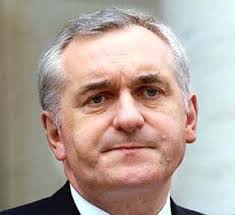
Former Taoiseach Bertie Ahern has agreed to become a sports journalist for the Irish News Of The World, writing a weekly column for the Sunday edition of the tabloid.
Why?
Because he’s a “fan” I’d say. A fan of English football. Really, could the NOTW not get someone decent?
see here
and @IrishTimesBiz on twitter who broke the story
Saturday, July 11, 2009
The thing about fees is...
My feelings towards the re-introduction of student fees were initially quite straightforward- a big NO. I felt that it would impact most on the lower-income students who were already struggling to cope with university registration fees and accomodation costs. I even spoke to Eamon Gilmore one night in the ‘Green Room’ (If you could call it that) of RTE’s Questions and Answers and urged him to oppose the re-introduction of college fees wholeheartedly. I said that it would stop people from disadvantaged areas going to college, using my own area of Crumlin/Walkinstown as an example. I told him that I was the only one of my group of seven childhood friends to go on to third-level education and that I was one of a handful of people my age in the area I knew who went to university.
Then, as I spent more time in DCU, I realised that it wasn’t all so simple. As it is, there are very few people from any sort of ‘disadvantaged’ areas going to college. DCU’s ‘Access’ programme, which allows ‘working class’ students to go to DCU, doesn’t seem to extend to the southside of our city. Where are all the Access students from Dolphin’s Barn? Jobstown? Ballyfermot? Killinarden? The majority of people in colleges come from at least a reasonably well-off background. As a result, it seems, the majority seem to be terribly relaxed towards their college degree. One lecturer in my course resigned recently after a series of (at least a little bit) unwarranted and exaggerated claims were made against her by my fellow students. College, to these people, is about ‘the buzz’ and ‘the craic’, not the degree.
My message to the Department of Education is this; bring back college fees through the Australian system of student loans. This system is where a student pays no registration fee or fee initially for their course, but instead repays their debt after they have graduated and reached a certain income threshold (which has not been specified). According to The Irish Times in this article, the system could yield e380 million once it is fully operational (although it will cost e75 million per year initially). The amount to be repaid- the loan- will be a minimum of e21,000, with the fee increasing depending on the field of study.
I am in favour of this scheme. Granted, if I was to be selfish I could oppose it, as it will cost students significantly more than a degree costs currently, but we have to look at things (as FF keep telling us) ‘in the wider plan’. The one thing I would advise is that any scheme must be means-tested. The higher your family’s income, the higher your loan should be. Maybe this would force the wealthier students out there into actually thinking before they select a course to study, and not just go to a course because of the ‘buzz’ in the particular university.
There should, however, be certain caveats in any such scheme (as Mark Coughlan points out in his excellent post here). There should, most definitely, be no freeze in third-level recruitment enforced through the loan scheme. The loan scheme must be adequately funded if it is to work correctly. Finally, the ‘Access’ programme, as seen in DCU, should be extended to all colleges (and funded by the institution itself, in combination with the local county council) and it should be correctly applied, not simply to areas that once had ‘a bad name’. It too should be means tested and open to all.
To my fellow students who oppose the introduction of third level fees in any form (the USI et al); the current system of free education for all is nice, but completely unsustainable. Look around you, everyone is being hit. We happen to be in the ‘safe’ zone of university, we must share the hurt with our working brethren who are not so lucky.
Then, as I spent more time in DCU, I realised that it wasn’t all so simple. As it is, there are very few people from any sort of ‘disadvantaged’ areas going to college. DCU’s ‘Access’ programme, which allows ‘working class’ students to go to DCU, doesn’t seem to extend to the southside of our city. Where are all the Access students from Dolphin’s Barn? Jobstown? Ballyfermot? Killinarden? The majority of people in colleges come from at least a reasonably well-off background. As a result, it seems, the majority seem to be terribly relaxed towards their college degree. One lecturer in my course resigned recently after a series of (at least a little bit) unwarranted and exaggerated claims were made against her by my fellow students. College, to these people, is about ‘the buzz’ and ‘the craic’, not the degree.
My message to the Department of Education is this; bring back college fees through the Australian system of student loans. This system is where a student pays no registration fee or fee initially for their course, but instead repays their debt after they have graduated and reached a certain income threshold (which has not been specified). According to The Irish Times in this article, the system could yield e380 million once it is fully operational (although it will cost e75 million per year initially). The amount to be repaid- the loan- will be a minimum of e21,000, with the fee increasing depending on the field of study.
I am in favour of this scheme. Granted, if I was to be selfish I could oppose it, as it will cost students significantly more than a degree costs currently, but we have to look at things (as FF keep telling us) ‘in the wider plan’. The one thing I would advise is that any scheme must be means-tested. The higher your family’s income, the higher your loan should be. Maybe this would force the wealthier students out there into actually thinking before they select a course to study, and not just go to a course because of the ‘buzz’ in the particular university.
There should, however, be certain caveats in any such scheme (as Mark Coughlan points out in his excellent post here). There should, most definitely, be no freeze in third-level recruitment enforced through the loan scheme. The loan scheme must be adequately funded if it is to work correctly. Finally, the ‘Access’ programme, as seen in DCU, should be extended to all colleges (and funded by the institution itself, in combination with the local county council) and it should be correctly applied, not simply to areas that once had ‘a bad name’. It too should be means tested and open to all.
To my fellow students who oppose the introduction of third level fees in any form (the USI et al); the current system of free education for all is nice, but completely unsustainable. Look around you, everyone is being hit. We happen to be in the ‘safe’ zone of university, we must share the hurt with our working brethren who are not so lucky.
Wednesday, June 17, 2009
Interview with People Before Profit Councillor Joan Collins
Today I spoke with Councillor Joan Collins of People Before Profit who represents the Crumlin/Kimmage ward of Dublin City Council (DCC). Councillor Collins is a well known opponent of the bin tax, high-rise apartment blocks (and abuse of rezoning schemes in DCC) and the cutbacks to Our Lady’s Children’s Hospital in Crumlin (Crumlin Hospital). A councillor since 2004, Councillor Collins works in An Post and has been active in the trade union movement all her life.
NF: A lot of smaller leftist parties and left-leaning independents were elected in the last local elections. Do you think this is the start of a change in Irish politics, a protest vote or a combination of the two?
JC: I’d say it was a mixture of both. I think there is a change in the way people are thinking, obviously because of what has happened over the last year, the impact the cuts are having on people, how quickly they’ve come and how the government has been in the process.
Everyone knew what was happening a few years ago. Developers knew. People on the street knew what was happening because of all the apartments sitting empty. I remember people telling me “ah there’s an apartment building there; fifty apartments and not a person in one.” People knew that there was a downturn coming and the goverment tried to pretend it wasn’t happening.
We went into an official recession last November, so people would’ve seen it developing over a period of time. I think people are very very angry about the inaction of the government and the attack on ordinary peeople that was the last budget. The people that caused this are getting away with it; they’re the ones that are sitting pretty on their big pensions while we’re getting pension levies and cutbacks in our hospitals and communities.
People are seeing people like myself, activists who have been around a long time, as people who’ll kick Fianna Fáil out.
Do you predict a growth for People Before Profit in the future? Will you build on your five seats in DCC and challenge for a Dáil seat?
Yeah we got five council seats across Dublin which was a huge breakthrough as this was the first election we really campiagned as an organised force.
At People Before Profit we want to develop the movement now. I think People Before Profit is a good, catchy idea- it’s putting people before the greed, cronyism and profiteering we’ve had for years in this country.
We are in talks with the Tipperary Workers and Unemployed Action Group, who have fourteen councillors across Tipperary and fourty-three percent of the vote, and they’ve been around for a long time. They also had a Dáil seat but lost it in the last General Election, like Joe Higgins did. We’re looking at linking up with them, and we’ve also been talking to people like Declan Bree in Sligo and Catherine Connolly in Galway, who’d be ex-Labour. Chris O’Leary in Cork who left the Green Party over their policies in government would be another one we’re talking to.
We’re looking at broadening it out now, we’ll be tallking to Joe Higgins and the Socialist Party because there’s a real need now for an alternative. To me Labour and Fine Gael aren’t real opposition. You could see that in Dublin where the working class didn’t really vote for Fine Gael, they know that they’re only a mirror image of Fianna Fáil.
Labour don’t seem to really have in them to go out into communities and get people organised. They talk the talk, but they don’t walk the walk. When they were out canvassing for the local elections they were all talking about going it on their own, now they’re going in with Fine Gael on the DCC. People voted for real change, not the same old crap they;re giving us on that council. They’ve linked up with Fine Gael, Fianna Fáil, Sinn Fein and all for chairmans seats on the Special Policy Committees.
There’s definitely a need for a group like the People Before Profit Alliance, and I think we will grow. We’re really calling on people like Joe Higgins to organise and build a new Workers’ movement, and hopefully then we can work with him.
You’re very much a campaigner on issues like the bin tax and the cutbacks to Crumlin hospital. How important is it for a successful election campaign to be centred on issues like these?
Well it’s really part of the process. Following on from what I was saying earlier about Labour talking the talk but not walking the walk; well people like myself, Brid Smith and Richard Boyd-Barrett are actually out in the communities organising people to stop bad things happening and to push good things happening. We successfully stopped the sale of ten percent of Pearse Park to a private developer and we also stopped the building of the high-rise apartments there. We stopped the rezoning of the park, and now we’re trying to work with the clubs there to have them go to the council and say “this is about what we want, not what you want.”
I remember a while ago the council commissioned an architect to draw up a plan for Crumlin Village. There was a meeting called, and a lot of people were excited as they went down to it. All it was was five-storey developments from one end of the village to the other. He was asked did he ever put his foot inside Crumlin, did he know the history of Crumlin, and he said he never had set foot in Crumlin, didn’t know a thing about it. That was DCC sending a green light out to developers, saying that this is the sort of thing they’ll accept.
We also stopped that horrible development at the Ashleaf Shopping Centre, and An Bord Pleanala went on and castigated DCC for ever allowing it. You’d nearly wonder where the permission for the developments is coming from.
From there I talked to people in the area and set up the Dublin 12 Development Action Group, which a sort of an umbrella group for community activists which educates people about development law and planning law.
Campaigning on issues is really crucial to politics. It’s crucial for people to see that you’re there and you’re not just around at election time.
I recently saw your statement where you spoke out against the agreement in DCC where Fine Gael and Labour effectively decide mayoral and committee positions amongst themselves. What alternative agreement would you prefer?
Well I would have preferred if Labour had come out with a set of principles for the council and for the community. People like ourselves would then support them, we could be like a block against Fianna Fáil and Fine Gael.
What has been done in other areas, such as in Tipperary, is that the positions are rotated frequently so that each group in the council has a chance to advocate their own ideas. This year Fine Gael and Labour have said to the Tipperary Workers and Unemployed Action Group that they wouldn’t be supporting the policy of rotation anymore.
Ideally we’d have a directly elected Lord Mayor, which is an idea I’d fully support. I know Gormley has said that we’d have that system in place now, but unfortunately I can’t see that happening now.
I’d say what Minister Gormley was originally thinking was that he’s get a Green Lord Mayor of Dublin, but that’s not going to happen now.
So ideally the position of mayor and the other position would be either elected or rotated, so that there’s no alliances made and that it’s independent of the City Manager.
On Monday Emer Costello effectively got in by default. Mannix Flynn had said he’d run against Kevin Humphreys for Deputy Lord Mayor. We’d been told by two independents that they’d vote for Costello because she was in their constituency, but when it came to it they voted for Kevin Humphreys for Deputy aswell. They’d obviously both made a deal beforehand that they’d both vote for Labour.
Women are drastically under-represented in Irish politics. You were the only female candidate in the Crumlin/Kimmage constituency for the local elections, and you are now the only female councillor. How can women increase their representation in Irish politics?
It is a tough question to answer because without the social backup a lot of women you can’t access politics. I work in An Post and for years I was involved in unions all my life. What I always noticed was women were involved in their union at a young age, dropped away from the union as their family responsibilities grew and the came back into it as they grew older.
Unless radical things like workplace childcare start to happen it will be difficult to change.
For working-class women it’s even tougher. Politics takes money, and a lot of women just don’t have that money. However on our Area Committee (in DCC) now, there are six women and five men. But I would question what type of women and men we have in there. Ultimately it does come down to class politics. There’s very few working-class women in politics, but I think it something that you’d have to address over a period of time. Stopping globalisation and crony capitalism with democratic socialism is a way forward.
Many women, due to family and work commitments, just don’t have the time to get involved. By the time they get home from work they’re making dinner and putting the kids to bed, they just don’t have the time.
Do you think there is a mentality of “women never get elected, so what hope do I have?” among women?
I think so, women are sort of put into boxes in that way. The good thing is that women now are much more outgoing than they ever were when I was starting out, when we were all definitely put in a box. Hopefully seeing women like myself get elected will boost womens’ confidence that they can get elected.
Many thanks to Joan Collins for her time and patience
NF: A lot of smaller leftist parties and left-leaning independents were elected in the last local elections. Do you think this is the start of a change in Irish politics, a protest vote or a combination of the two?
JC: I’d say it was a mixture of both. I think there is a change in the way people are thinking, obviously because of what has happened over the last year, the impact the cuts are having on people, how quickly they’ve come and how the government has been in the process.
Everyone knew what was happening a few years ago. Developers knew. People on the street knew what was happening because of all the apartments sitting empty. I remember people telling me “ah there’s an apartment building there; fifty apartments and not a person in one.” People knew that there was a downturn coming and the goverment tried to pretend it wasn’t happening.
We went into an official recession last November, so people would’ve seen it developing over a period of time. I think people are very very angry about the inaction of the government and the attack on ordinary peeople that was the last budget. The people that caused this are getting away with it; they’re the ones that are sitting pretty on their big pensions while we’re getting pension levies and cutbacks in our hospitals and communities.
People are seeing people like myself, activists who have been around a long time, as people who’ll kick Fianna Fáil out.
Do you predict a growth for People Before Profit in the future? Will you build on your five seats in DCC and challenge for a Dáil seat?
Yeah we got five council seats across Dublin which was a huge breakthrough as this was the first election we really campiagned as an organised force.
At People Before Profit we want to develop the movement now. I think People Before Profit is a good, catchy idea- it’s putting people before the greed, cronyism and profiteering we’ve had for years in this country.
We are in talks with the Tipperary Workers and Unemployed Action Group, who have fourteen councillors across Tipperary and fourty-three percent of the vote, and they’ve been around for a long time. They also had a Dáil seat but lost it in the last General Election, like Joe Higgins did. We’re looking at linking up with them, and we’ve also been talking to people like Declan Bree in Sligo and Catherine Connolly in Galway, who’d be ex-Labour. Chris O’Leary in Cork who left the Green Party over their policies in government would be another one we’re talking to.
We’re looking at broadening it out now, we’ll be tallking to Joe Higgins and the Socialist Party because there’s a real need now for an alternative. To me Labour and Fine Gael aren’t real opposition. You could see that in Dublin where the working class didn’t really vote for Fine Gael, they know that they’re only a mirror image of Fianna Fáil.
Labour don’t seem to really have in them to go out into communities and get people organised. They talk the talk, but they don’t walk the walk. When they were out canvassing for the local elections they were all talking about going it on their own, now they’re going in with Fine Gael on the DCC. People voted for real change, not the same old crap they;re giving us on that council. They’ve linked up with Fine Gael, Fianna Fáil, Sinn Fein and all for chairmans seats on the Special Policy Committees.
There’s definitely a need for a group like the People Before Profit Alliance, and I think we will grow. We’re really calling on people like Joe Higgins to organise and build a new Workers’ movement, and hopefully then we can work with him.
You’re very much a campaigner on issues like the bin tax and the cutbacks to Crumlin hospital. How important is it for a successful election campaign to be centred on issues like these?
Well it’s really part of the process. Following on from what I was saying earlier about Labour talking the talk but not walking the walk; well people like myself, Brid Smith and Richard Boyd-Barrett are actually out in the communities organising people to stop bad things happening and to push good things happening. We successfully stopped the sale of ten percent of Pearse Park to a private developer and we also stopped the building of the high-rise apartments there. We stopped the rezoning of the park, and now we’re trying to work with the clubs there to have them go to the council and say “this is about what we want, not what you want.”
I remember a while ago the council commissioned an architect to draw up a plan for Crumlin Village. There was a meeting called, and a lot of people were excited as they went down to it. All it was was five-storey developments from one end of the village to the other. He was asked did he ever put his foot inside Crumlin, did he know the history of Crumlin, and he said he never had set foot in Crumlin, didn’t know a thing about it. That was DCC sending a green light out to developers, saying that this is the sort of thing they’ll accept.
We also stopped that horrible development at the Ashleaf Shopping Centre, and An Bord Pleanala went on and castigated DCC for ever allowing it. You’d nearly wonder where the permission for the developments is coming from.
From there I talked to people in the area and set up the Dublin 12 Development Action Group, which a sort of an umbrella group for community activists which educates people about development law and planning law.
Campaigning on issues is really crucial to politics. It’s crucial for people to see that you’re there and you’re not just around at election time.
I recently saw your statement where you spoke out against the agreement in DCC where Fine Gael and Labour effectively decide mayoral and committee positions amongst themselves. What alternative agreement would you prefer?
Well I would have preferred if Labour had come out with a set of principles for the council and for the community. People like ourselves would then support them, we could be like a block against Fianna Fáil and Fine Gael.
What has been done in other areas, such as in Tipperary, is that the positions are rotated frequently so that each group in the council has a chance to advocate their own ideas. This year Fine Gael and Labour have said to the Tipperary Workers and Unemployed Action Group that they wouldn’t be supporting the policy of rotation anymore.
Ideally we’d have a directly elected Lord Mayor, which is an idea I’d fully support. I know Gormley has said that we’d have that system in place now, but unfortunately I can’t see that happening now.
I’d say what Minister Gormley was originally thinking was that he’s get a Green Lord Mayor of Dublin, but that’s not going to happen now.
So ideally the position of mayor and the other position would be either elected or rotated, so that there’s no alliances made and that it’s independent of the City Manager.
On Monday Emer Costello effectively got in by default. Mannix Flynn had said he’d run against Kevin Humphreys for Deputy Lord Mayor. We’d been told by two independents that they’d vote for Costello because she was in their constituency, but when it came to it they voted for Kevin Humphreys for Deputy aswell. They’d obviously both made a deal beforehand that they’d both vote for Labour.
Women are drastically under-represented in Irish politics. You were the only female candidate in the Crumlin/Kimmage constituency for the local elections, and you are now the only female councillor. How can women increase their representation in Irish politics?
It is a tough question to answer because without the social backup a lot of women you can’t access politics. I work in An Post and for years I was involved in unions all my life. What I always noticed was women were involved in their union at a young age, dropped away from the union as their family responsibilities grew and the came back into it as they grew older.
Unless radical things like workplace childcare start to happen it will be difficult to change.
For working-class women it’s even tougher. Politics takes money, and a lot of women just don’t have that money. However on our Area Committee (in DCC) now, there are six women and five men. But I would question what type of women and men we have in there. Ultimately it does come down to class politics. There’s very few working-class women in politics, but I think it something that you’d have to address over a period of time. Stopping globalisation and crony capitalism with democratic socialism is a way forward.
Many women, due to family and work commitments, just don’t have the time to get involved. By the time they get home from work they’re making dinner and putting the kids to bed, they just don’t have the time.
Do you think there is a mentality of “women never get elected, so what hope do I have?” among women?
I think so, women are sort of put into boxes in that way. The good thing is that women now are much more outgoing than they ever were when I was starting out, when we were all definitely put in a box. Hopefully seeing women like myself get elected will boost womens’ confidence that they can get elected.
Many thanks to Joan Collins for her time and patience
Tuesday, June 16, 2009
Interview with Labour Councillor Eric Byrne
I chatted recently to Councillor Eric Byrne of the Labour Party, who was returned in the Crumlin/Kimmage ward this month. Cllr. Byrne was first elected to Dublin City Council (DCC) in 1985, and was a member of Dáil Eireann from 1989-1992 and 1994-1997. Cllr Byrne is a member of of the Dublin 12 Drugs Task Force and Ballyfermot Local Area Partnership board, and helped to found the Fatima Mansions and Dolphin House Task Forces. Cllr.Byrne has kept a blog (here) since 2006, and also has a website at www.ericbyrne.ie. I was luckily able to ask Cllr. Byrne a few questions about his campaign, his use of social media and the Labour Party.
NF:What were the issues brought up the most on the doorsteps during you campaigning?
EB:Well the main issues brought up on the doorsteps were national issues. People generally only wanted to talk about national issues. Public Servants wanted to talk about the Pension Levy, the Elderly wanted to talk about the abolition of the Christmas bonus, and people only brought up topics and subjects that were national. Nobody really wanted to know about local issues like “will you fix that footpath”.
Let me explain my modus operandi when canvassing. Name Recognition is strong for me among people who have been living in the area for a few years, so the real challenge for me would be getting people who have recently moved into the area to vote for me. For new arrivals I’d invariably say; “There’s more to me than knocking on your door. Will you have a look at my website?” I’d have all my policies and updates on each local area on my website, so it’s really an easier way to communicate with people who wouldn’t speak to you on the doorstep.
Do you think your election, and the success of Labour nationally, was a reaction to the unpopularity of the government? Was it a protest vote?
There’s no doubt that there was a substantial element of protest in the vote. However there was clearly an element of people who had voted for Fianna Fáil moving away from the party. The protest vote mainly went to independents and smaller parties like (People Before Profit Councillor) Joan Collins. The Labour Party profited mainly from the ‘political protest’ voters who had moved away from the government, rather than the protest voters who were voting in protest against the political establishment.
How much of your success do you attribute to the current popularity of your party?
Well let me say that I would attribute most of my success to twenty-five years of hard political slogging. I would attribute the increase in my vote to the popularity of the Labour Party, and indeed the popularity of our leader of Eamon Gilmore.
Let me give you an example. Five years ago I got twenty percent of the first preference vote in this constituency. This year I got twenty-five percent of the first preference vote. Together with my running mate Henry Upton, Labour got nearly fifty percent of the vote in the constituency. It’s the increase that I would attribute to the current popularity of the Labour Party.
What do you make of the thirty-year electoral pact (as it is referred to by The Irish Times) in the Dublin mayoral elections between Fianna Fáil, Fine Gael and Labour? Although it gives Labour the chance to have mayors like the recently elected Emer Costello, does it not undermine the poltical independence of the party in Dublin City Council?
I think local government is very different to national government. You rely even more on the support of other parties. It is unheard of in DCC that any party would have an overall majority.
Therefore you need the support of other parties. There are fifty-two seats, so you would need twenty-seven to have a majority. Labour have nineteen councillors on DCC so we must look around and see who we can do business with. In our case we did business with everybody.
Although we were the best represented party on DCC this year (ahead of Fianna Gael with 16 seats), there was an agreement to distribute positions on DCC across all the parties. For example on the six strategic policy committees, there are three Labour representatives, one Fianna Fáil, one Fine Gael and one Sinn Fein.
All parties represented on DCC are represented with at least one official position, except the five independents. Majority rule in politics is the reality of democracy.
We need stability in this current economic climate, and by working together, Labour, Fianna Fáil, Fine Gael, Sinn Fein and the independents are giving this stability to DCC.
How important a role do you think local politics can play in the coming years?
Well I’m twenty-four years on DCC, and I have to say the discussions Labour held with the other parties were some of the most fascinating I’ve ever taken part in because they all wanted to discuss policy.
There are now six Strategic Policy Committees, each has a manager who sits monthly on the Corporate Policy Committee. This is effectively the ‘cabinet’ of DCC, and they shape policy.
For the first time now you’ll see DCC run around policy issues as opposed to gimmicky local issues.
DCC is trying to spread the word that Dublin will be the engine of growth in this country. You hear Fianna Fáil and Fine Gael sort of downplay Dublin’s importance and go on about rural areas, but I believe that Dublin can and will be the engine of growth for Ireland in the next few years.
We’ll be trying to market Dublin as an ‘open city’ in the next few years. This will include working with the Gay community and other groups to make our city as vibrant as possible. This in turn will increase tourism and commerce.
You were one of the pioneers in terms of Irish politicians keeping blogs. Do you see online social networking playing a larger role in future elections?
Well one only has to look at what’s happening now out in Iran. Social Networking and blogging are playing a bigger role. It’s well known that the media and journalists are looking at blogs and social networks to get information from the source.
I’m bringing the local issues to the people by putting up blogs and photos on my website. My website has a section for each area of my constituency, so people can see directly the local issues I’ve been working on in their area. People are always trying to catch up with what I’m doing, and the website lets them.
There is a generational conflict now between the more traditional older politicians, who are struggling to adapt and use new social networking and blogging tools, and the new younger generation of politicians, who are very web-savvy.
Many thanks to Councillor Eric Byrne for his time and patience.
Thursday, June 4, 2009
Use of Social media in the 2009 European elections
On my twitter today, I wrote “just saw Joe Higgins canvassing outside the GPO. No moratorium around here!” Within minutes “VoteJoeHiggins” had replied and told me that the moratorium only applies to broadcast media. After the last US Election showed what power social media can wield in a modern election, I went in search of the social media used by the various MEP candidates in my own constituency of Dublin.
Starting out with the aforementioned Joe Higgins, I noticed through his www.joehiggins.eu website that he has a strong presence online. The drop-down tab “social networks” reveals the campaign’s profiles on Facebook, YouTube, Twitter, Flickr, Ustream, Bebo, Myspace and CandidateWatch. His Facebook and Bebo pages are regularly updated with snippets from the campaign trail. Photos are uploaded onto Flickr, and recordings of Mr. Higgins talking about his election policies are uploaded onto his YouTube (and in turn onto his own website.) Impressively, the Joe Higgins campaign uses UStream to stream some press conferences and speeches as they happen.
The Sinn Féin MEP candidate works mainly from a section on the Sinn Féin homepage. Mary-Lou McDonald keeps a regular blog on the site, detailing her experiences while campaigning. Her YouTube channel features speeches and excerpts from Ms. McDonald’s time in the European Parliament (although her pronunciation of “Eorpach” is a bit dodgy in one of the videos). Photos are also uploaded onto her site, although few seem to be from canvassing. Ms. McDonald seems to b e working from the Sinn Féin profiles on YouTube, Facebook, Flickr, Twitter and Myspace (as are all the Sinn Féin MEP candidates).
Fianna Fail candidate Eoin Ryan has his own website www.eoinryan.eu (well, he’d hardly be using the site with the huge Fianna Fail logo on it now). Mr. Ryan has a well stocked Photo Gallery, with photos of him in the European Parliament, on his travels around the world and with a few politicians (Bertie Ahern, Michael Martin, Nicolas Sarkozy, Jean Claude Trichet*, Tom Kitt, one of the many Ardaghs, Brian Lenihan, Pat Cox) and, bizarrely enough, Packie Bonner. Mr. Ryan keeps a well-updated Twitter (although the speediness of his replies does not match Joe Higgins), a Facebook group and a blog on Blogspot entitled “The Campaign Trail”.
Former Green Party MEP Patricia McKenna, now running as an independent, also works from a .eu domain- www.patriciamckenna.eu . Ms McKenna keeps up the trend by having her own Facebook profile- with messages of support from as far afield as The Netherlands and Denmark. Her Information bar (displayed just under the profile photo) reads – “Patricia McKenna was elected to the European Parliament in 1994 and has 10 years experience in the parliament. Standing as an independent, she believes it’s time for a strong independent voice to represent the people of Dublin in Europe.” Compare this to Eoin Ryan’s “Your Voice in Europe”. If slogan length was an indicator of a good representative, Ms. McKenna would surely top the polls. Ms McKenna also has her own YouTube video stream on her website, detailing (albeit at far greater length than any of the other candidates) her policy for the European Parliament.
The award for the best website layout must surely go to Labour MEP Pronsias DeRossa. The Labour MEP bucks the trend of .eu domains with his www.derossa.com website. No first names around these parts. Mr DeRossa uses his slick-looking website for an excellent blog and video stream. Mr DeRossa, at this stage a seasoned MEP (this is his tenth year in office) uses his video stream for more than mere speeches or to outline policy, however. His video stream adresses questions such as “What does an MEP do?” and also to show us “A Day in my life as a member of the European Parliament”. The former Democratic Left and Workers’ Party leader also has profiles on Twitter, Facebook and Flickr.
Independent Emmanuel Sweeney, who is also running in the local elections, seems not to have a huge online presence. The only mention I could find of him were on electionsireland.org, where he has a photo and details of which positions he was running for. Apart from this, there is only a mention on popular forum Politics.ie- one poster enthuses “Emmanuel Sweeney is the only for Europe...word is around my office that he is going to landslide it.” This is met promptly by another post- “Yes, but who exactly is Emmanuel Sweeney ?” However the original poster claims “Emmanuel Sweeney is the only true democrat that doesnt waste tax payers money or try to brain washes you with posters, canvassing, leaflets, websites or even using the TV when on it.”
Fine Gael MEP Gay Mitchell, currently topping the Irish Times/TNS mrbi polls, has both a section on the Fine Gael website and his own - www.gaymitchell.ie . As per usual, videos are uploaded onto this site of speeches, policy statements... they all sound the same after listening to a dozen of them. Actually maybe they usually sound the same anyway. Mr Mitchell has photos of him (from his Flickr account, no less) around Dublin, with various FG councillors and in the European Parliament.
The Libertas candidate, Caroline Simons, is at http://carolinesimons.ie . Ms Simons’ opening page contains an impassioned plea which is rather eye-catching against a black background; “We need to take Europe back for the people of
Overall the MEP candidates (apart from Emmanuel Sweeney) seemed to have embraced new social media. In particular there is a prevalence of videos, blogs, Facebook groups and twitter updating. These provide prospective voters with a way to see what exactly it is their candidates stand for beyond the posters they see outside. To see the Irish political system lurch forward into this new age of instant communication and information is a little bewildering.
*I fully realise that Jean-Claude Trichet is not a politician, and is in fact the head of the European Central Bank
Tuesday, June 2, 2009
The national team of Ireland, six goalies and Craven Cottage
The sheer contempt in which the League of Ireland is held by those involved at the top of Irish football never ceases to amaze me.
After West Bromwich Albion’s Dean Kiely left the Ireland squad before last week’s friendly against Nigeria (I’ll come back to that later), Kieran Westwood of Coventry City was the only backup to regular goalkeeper Shay Given left. Westwood informed the management of the national team that he was, in fact, getting married on the day of the Bulgaria match next Saturday.
Through their scouting of goalkeepers, Giovanni Trappatoni, Marco Tardelli and Liam Brady decided that next in line were Colin Doyle of Birmingham City and Wayne Henderson of League Two outfit Grimbsy Town. This season, Grimbsby finished just four points clear of relegation out of the Football League, conceding a massive 59 goals. In fairness to him, Henderson (on loan from Preston North End) only played in fourteen matches.
Meanwhile, Colin Doyle may seem like a decent deputy, as Birmingham achieved promotion with the best defensive record in the Championship, conceding just 34 goals. Doyle, however, made just four appearances all season (one of his appearances was from the bench).
Across the sea, in the supposed home of our national team, calls are being made for Brian Murphy of Bohemian FC to get a call-up. Bohemians are the reigning League of Ireland Premier Division champions, and currently top the table with 29 points. This season, in 14 matches, Bohemians have conceded 7 goals. Brian Murphy has played in all of Bohemians’ league matches this season. While I, admittedly, am no great supporter of Bohemians, I can see that Murphy would be a far better than benchwarmer Doyle or nearly-relegated Henderson.
Neither Trappatoni, Tardelli nor Brady have been to a League of Ireland match since they took their jobs with the FAI. Surely there are some players in our national league that would merit more attention than second- and third-rate players based in England. As Kevin Doyle, Noel Hunt and Keith Fahey have all proved recently, players can make the leap from the League of Ireland to a high level of English football relatively easily. Once they do, players can then be considered for the national team. Why can’t the management of the IRISH national team consider IRISH players? Shouldn’t the policy be to play the best players?
The policy of favouritism towards English players was shown recently with the friendly with Nigeria held in Craven Cottage, London (and the subsequent training session was indeed held in Arsenal’s training ground). RTE’s Tony O’Donoghue said last night on Monday Night Soccer that holding the training sessions and matches in England would “definitely [be] an option” in the future. The friendly in Craven Cottage attracted around 10 thousand fans last Friday, a similar figure to the amount present for last year’s friendly against Nottingham Forest held in Dalymount Park. If held in Ireland, a friendly against Nigeria (or any other opposition) would attract great numbers. What about the RDS, home of the FAI Cup final and host to a number of Leinster Rugby matches this season? Shouldn’t the IRISH national team play in a venue which suits its fans, the IRISH people? Although holding friendlies and training sessions in England may seem logical given that all of our players are based in either England or Scotland, surely the FAI should be looking at commercial viability and the service it owes its fans ahead of pandering to players.
The disillusionment felt by many fans after the tenure of Steve Staunton may yet return.
"Is your Mam in son?"
A few days ago, a representative for a Sinn Féin candidate for the local elections in my area knocked on my door. As I answered the door, I prepared for the usual “I’ll make your voice heard” shtick which I should’ve heard. When the man saw me, he smiled and asked “Is your Mam in son?” I replied that I am a registered voter, and have been since last summer, to which the man replied “Oh right” and proceeded to simply utter “you wouldn’t consider giving [the Sinn Féin candidate] one of your preferences next week, would you?”
This is not the first time this has happened. Consistently Fine Gael, Fianna Fail and other parties have sent people to my door whose first words are “Is your Mam/Dad in?”
Yet for a party whose support is higher in the 18-25 age bracket than any other age group (according to the Irish Times/TNSmrbi poll published on Friday), the disregard that Sinn Féin showed me set me aback a bit. I am a year shy of my twentieth birthday, and by all acounts I do not look under eighteen. The Sinn Féin canvasser assumed that I was younger than eighteen. Would it not be more helpful for a seemingly progressive, “trendy” party to assume that a young person is of legal voting age until told otherwise? Isolating young people in such a manner only exacerbates the perceived apathy towards politics among people my age .
Sinn Féin and the other established political parties should recognise the considerable support the 18-25 year olds give the party by adopting a positive approach to young voters.
Subscribe to:
Posts (Atom)



 Posts
Posts


